
Flatware is something most of us use every day, yet few people stop to think about how each piece is designed for a specific purpose. Whether you’re selecting a flatware collection for a restaurant, sourcing products for retail, or simply building a better dining experience at home, understanding the different types of flatware helps you choose the right pieces with confidence.
According to dining etiquette references from organizations such as the Emily Post Institute, modern table settings have evolved to make meals more comfortable and efficient, with every utensil designed to complement a particular dish rather than simply adding decoration. Professional chefs and hospitality experts also recognize that using the appropriate flatware can improve both presentation and the overall dining experience.
In this guide, we’ll explore the most common types of flatware and explain what each one is designed to do.
Flatware generally includes forks, knives, and spoons used during meals. While many households rely on a basic 20-piece or 24-piece set, restaurants, hotels, and formal dining venues often use a much wider variety of utensils.
Each design differs in size, weight, bowl shape, tine length, or blade profile to suit different foods. These subtle differences make eating easier while creating a more refined table setting.
Teaspoon
The teaspoon is the most versatile spoon in any flatware set. It works well for stirring coffee or tea, eating yogurt, cereal, desserts, and many everyday meals. Because of its practical size, it is often the most frequently used spoon in a household.
Dessert Spoon
A dessert spoon features a slightly larger, deeper bowl than a teaspoon. It is designed for puddings, mousse, ice cream, fruit salads, and other desserts that require a little more capacity.
Soup Spoon
Soup spoons have a larger, rounded bowl that makes it easier to enjoy soups, chowders, stews, and broths without spilling. The deeper bowl allows each spoonful to hold more liquid.
Tablespoon
Unlike the tablespoon used as a cooking measurement, the dining tablespoon is commonly used as a serving spoon for shared dishes placed in the center of the table.
Demitasse Spoon
This miniature spoon accompanies espresso, cappuccino, and other specialty coffee drinks served in small cups. Its compact bowl fits perfectly inside espresso cups while the longer handle allows easy stirring.
Iced Tea Spoon
With its long, slender handle, the iced tea spoon reaches the bottom of tall glasses, making it ideal for stirring iced tea, lemonade, smoothies, milkshakes, and layered beverages.
Grapefruit Spoon
A grapefruit spoon has a narrow bowl with serrated edges that help separate citrus fruit from the peel. It also works well for kiwi, oranges, and melons.
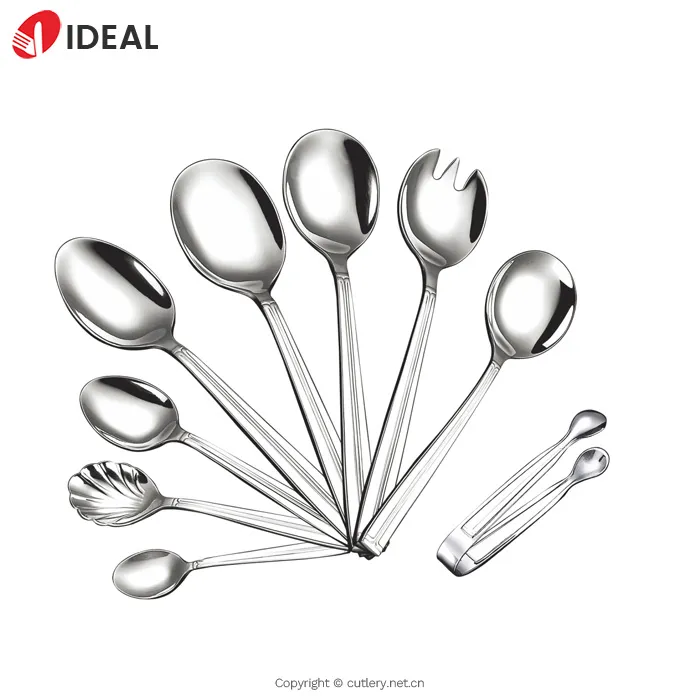
Dinner Fork
The dinner fork is the centerpiece of most flatware collections. Usually featuring four tines, it is designed for main courses including meat, vegetables, pasta, and rice dishes. For many families, this is the fork used for nearly every meal.
Salad Fork
Slightly shorter than the dinner fork, the salad fork offers better control when eating leafy greens, sliced vegetables, or fresh fruit. Its smaller size makes it comfortable for lighter courses.
Dessert Fork
A dessert fork is narrower and more delicate than a dinner fork. It is commonly used for cakes, pastries, pies, and soft desserts where precision matters more than cutting power.
Cocktail or Oyster Fork
This compact fork is made for seafood appetizers, oysters, shrimp cocktails, olives, cheese cubes, and other bite-sized hors d’oeuvres. It allows diners to handle small portions neatly.
European Dinner Fork
European-style dinner forks are generally larger and slightly heavier than standard American designs. They are commonly found in fine dining restaurants and formal table settings where substantial flatware complements premium tableware.
Dinner Knife
The dinner knife is designed for everyday dining. Its gently serrated edge cuts cooked meats, vegetables, and other main-course foods without being overly sharp.
Butter Knife
A butter knife features a rounded tip and dull edge, making it ideal for spreading butter, cream cheese, or soft spreads without tearing bread.
Butter Spreader
Smaller than a dinner knife, the butter spreader is commonly placed on bread plates during formal meals. Its wide, flat blade provides better control when spreading butter, jams, or soft cheeses.
European Dinner Knife
Larger and heavier than the standard dinner knife, the European dinner knife creates a balanced feel when paired with European-style forks. It is often selected for upscale restaurants and banquet service.
Some meals require utensils designed for very specific foods.
While these specialty pieces aren’t found in every home, they’re widely used in hospitality, catering, and fine dining where presentation and functionality are equally important.

When selecting flatware, the number of pieces isn’t the only factor worth considering. Material quality, finish, weight, and craftsmanship all contribute to long-term performance.
Many buyers choose stainless steel because it offers excellent durability, corrosion resistance, and easy maintenance. Grades such as Acero inoxidable 18/10 are especially popular thanks to their high chromium and nickel content, which helps maintain shine while resisting rust and everyday wear.
It’s also worth considering your intended use. A family kitchen may only need essential utensils, while restaurants, hotels, and catering businesses often benefit from expanded collections that include serving pieces and specialty flatware.
Understanding the different types of flatware makes it much easier to build a collection that suits your dining style. Every spoon, fork, and knife has been developed with a practical purpose, from enjoying a bowl of soup to serving an elegant multi-course dinner.
Whether you’re purchasing flatware for everyday use or sourcing products for commercial dining, choosing well-designed utensils helps create a better experience at the table. Manufacturers such as Cubiertos IDEAL focus on producing durable stainless steel flatware for both household and hospitality markets, while the most important consideration remains selecting pieces that match your customers’ needs and the meals they’ll enjoy for years to come.
 Español de México
  English
  Русский
  Português (AO90)
  العربية
  (فارسی (افغانستان